
 Facebook
 X
X LinkedIn
 Forward
Scott Sonnon, Ph.D. (in progress), Operational Psychology
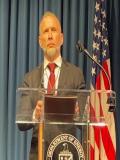
Scott B. Sonnon, Ph.D (in progress) directs the U.S. Department of Energy Human Factors Laboratory. He has created the tactical fitness standards and training for over 90 agencies, to include the FBI, DIA, USSOCOM, and the NNSA. He is a former 5x Gold Medalist for the U.S. National Team in wrestling and martial art.
Present Role:
- Directs the U.S. Department of Energy Human Factors Laboratory
Education:
- Ph.D. (in progress), Operational Psychology
- Master of Science, Applied Breathing Sciences
- Masters of Sport // Human Survival in Extreme Conditions
- The only American to have completed the GRU Spetsnaz human performance program and receive licensure from the Russian Olympic Committee as a licensed instructor.
Experience:
- Designed human performance training programs and standards for the National Nuclear Security Administration (NNSA), Defense Intelligence Agency (DIA), Federal Bureau of Investigations (FBI), Headquarters United States Special Operations Command (USSOCOM)
- Developed human performance training and standards for 91 federal agencies for the U.S. Department of Homeland Security (DHS) Federal Law Enforcement Training Center (FLETC)
Awards:
- Awarded the 2024 Global Security Director’s award for the development of biotechnology integration in the prevention and detection of Havana Syndrome (anomalous health incidents).
- Awarded the 2020 Global Security Director’s award for the development of predictive technology in the pre-symptomatic detection of COVID-19.
- U.S. National Team Gold Medalist in Sambo Wrestling, Submission Wrestling, Sport Jiujitsu, Sanshou Kickboxing, and Amateur Mixed Martial Arts – World Games Champion.
- Inducted into the U.S. Fitness Hall of Fame Museum, International Martial Arts Hall of Fame, and the Personal Trainer Hall of Fame.
- Named world’s “Top 25” trainers by Men’s Health, Men’s Fitness, Train, Black Belt magazines.
Positionality:
- Coming from a military family facing post-traumatic stress, domestic violence, and suicide, exacerbating childhood learning disabilities, dedicated a career to supporting the Force and their Families by advancing human performance optimization, reducing programming inefficiencies and expenditures on ineffective interventions, and maximizing holistic service member impacts.
For learning objectives, participants will learn the:
— Interplay of cognition, exertion, emotion, and speech in respiratory reflexes and breathing behavior.
— Capnography can be used to visualize all four domains through acid-base physiological changes (hypocapnia).
— Subclinical breathing behavioral habits can be triggered, strengthened, and generalized into other situations.
— Dysfunctional breathing habits can be safely interacted with, negatively practiced and extinguished in-situ/in-vivo.
Financial relationships
-
Type of financial relationship:There are no financial relationships to disclose.Date added:09/02/2025Date updated:09/02/2025
**Disclaimer**
This Continuing Medical Education (CME) Learning Management System, Ethos, includes individuals designated as 'faculty' for CME purposes. Please note that the term 'faculty' refers solely to their role as a contributor/planner within a CME activity and does not imply any formal affiliation with UT Southwestern Medical Center (UTSW). The display of names and credentials is intended for educational purposes only and does not necessarily indicate a professional or academic relationship with UTSW. Participants are encouraged to verify the affiliations and credentials of faculty members independently if further clarification is needed.