
 Facebook
 X
X LinkedIn
 Forward
Raymond Fowler, MD, FACEP, FAEMS
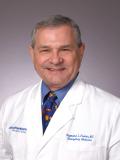
Raymond L. Fowler, M.D., FACEP, FAEMS
Professor and Chief, Division of Emergency Medical Services James M. Atkins Professor of Emergency Medical Services UT Southwestern Medical Center
Attending Emergency Medicine Faculty
Parkland Memorial Hospital
Dallas, Texas
Dr. Fowler has played an important role in the history of EMS medical direction and provider education. He served on the initial steering committee to form the National Association of EMS Physicians, the subspecialty organization for EMS Medicine, later becoming its fourth President, and he is past-President of the Georgia College of Emergency Physicians. He was a leader in the expansion and proliferation of the International Trauma Life Support International program, having served as National Program Director and ITLS Medical Director for the State of Georgia. A native of Georgia, he is now in his forty-first year of emergency medicine practice and EMS medical direction, having been Medical Director of Parkway Medical Center Emergency Department in Lithia Springs, Georgia for twenty years and on the state EMS council of Georgia for almost forty years.
He is Professor and Chief of the Division of Emergency Medical Services at the University of Texas Southwestern Medical Center in Dallas where he is the James M. Atkins Professor of Emergency Medical Services. He is Attending Emergency Medicine Faculty at Parkland Memorial Hospital Emergency Department.
A prolific author of over thirty textbook chapters on emergency medicine, Dr. Fowler was a Senior Editor for the previous edition of Emergency Medical Services: Clinical Practice and Systems Oversight, the landmark four-volume textbook from the National Association of EMS Physicians and for which he was a founding author. He was a founding author of the National EMS Medical Director Training Course and Practicum. He is a contributing author for numerous recent textbooks including Lippincott’s The Medical Response to Terrorism, Lippincott’s Tactical Emergency Medicine, and McGraw-Hill’s The Paramedic (now in its second edition). He is a principal author and designer of the National Disaster Life Support program, jointly
developed and sponsored by the AMA, CDC, DHS, Medical College of Georgia, and UT Southwestern Medical Center, one of the most active disaster and anti-terrorism training programs in the nation. He is a Co- Senior Editor for the EMS textbook from Lippincott “Avoiding Common Prehospital Errors” that was released in 2013.
Dr. Fowler is avidly involved in international EMS research. He was Co- Investigator for the Dallas Resuscitation Outcomes Consortium and served as Co-Principal Investigator for the Dallas arm of the NIH- NHLBI IMMEDIATE trial. Through these studies, Dr. Fowler is leading the EMS coordination in the Dallas – Fort Worth metroplex of some two thousand paramedics in research in CPR, traumatic hemorrhagic shock, traumatic brain injury, and acute coronary syndromes. He and his staff recently received a $3.5 million grant to create a system-wide “Recognition to Reperfusion Program for STEMI” in Dallas County, for which he serves as Co-Chairman.
A gifted and acclaimed lecturer in all areas of emergency medicine, Dr. Fowler is now leading the EMS continuing education industry through his work in streaming Internet-based EMS education at www.utsw.ws. A collection of his lectures, as well as his novels “A Time in Space” and “Spring in the Woods”, may be found at his website, www.rayfowler.com.
Financial relationships
-
Type of financial relationship:There are no financial relationships to disclose.Date added:05/13/2022Date updated:03/11/2026
**Disclaimer**
This Continuing Medical Education (CME) Learning Management System, Ethos, includes individuals designated as 'faculty' for CME purposes. Please note that the term 'faculty' refers solely to their role as a contributor/planner within a CME activity and does not imply any formal affiliation with UT Southwestern Medical Center (UTSW). The display of names and credentials is intended for educational purposes only and does not necessarily indicate a professional or academic relationship with UTSW. Participants are encouraged to verify the affiliations and credentials of faculty members independently if further clarification is needed.