
 Facebook
 X
 LinkedIn
 Forward
EM2610F “Thirty Years of Hospital Medicine Research and Evidence-Based Inpatient Care in the U.S.” (IM GR-100926)
Purpose and Overview
In 1996, Wachter and Goldman named the hospitalist. Within twenty years, the field reached roughly 50,000 physicians, yet its founding evidence was narrow. This Grand Rounds asks two questions. Has the accumulated burden of regulatory, documentation, and measurement requirements in adult inpatient care improved outcomes? And how can we improve inpatient care delivery at UTSW? The session separates research, which establishes what is true across populations, from evidence-based practice, which applies it to one patient. Ward audits found that about half of inpatient treatments had randomized trial support; the requirements layered around them have never been audited. Studies that hold the detection method constant show no measurable fall in inpatient harm. After the pandemic, staffed beds fell while daily census held steady; mean occupancy rose and admitted emergency patients boarded.
Target Audience
UT Southwestern faculty, fellows, residents and medical students, community physicians, nurse clinicians, physician assistants and nurses.
Learning Objectives
At the conclusion of this activity, the participant should be able to:
- Distinguish research from evidence-based practice and describe how inpatient requirements accumulate
- Interpret occupancy, boarding, and discharge timing as indicators of patient safety rather than operational efficiency alone
- Identify one requirement or workflow in their own practice that could be removed and studied prospectively
Course summary
- 1.00 AMA
- 1.00 Attendance
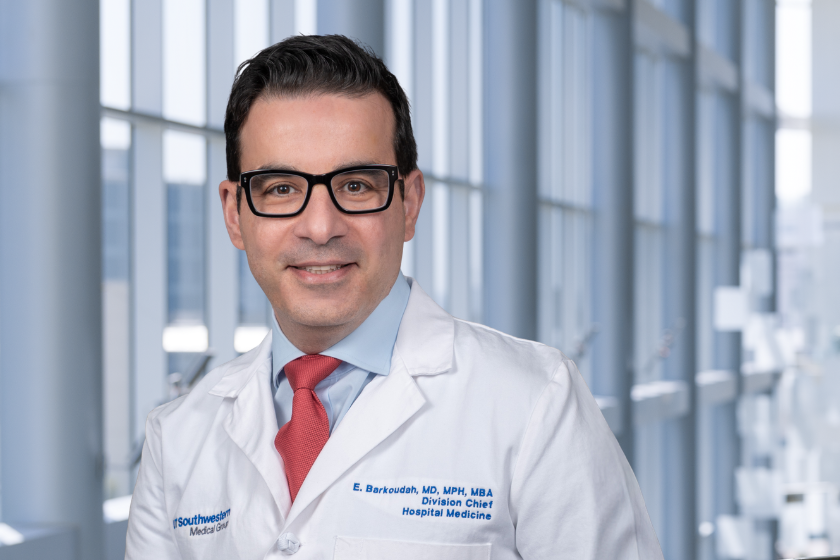
Ebrahim Barkoudah M.D. M.P.H. M.B.A.
Associate Professor of Internal Medicine
Chief, Division of Hospital Medicine
UT Southwestern Medical Center
Available Credit
- 1.00 AMA
- 1.00 Attendance
Price
Required Hardware/software
Activities should be run with recent versions of common browsers, including Internet Explorer, Firefox and Google Chrome